
Knowledge Article
10 facts you need to know about Environmental Product Declarations (EPDs)
As society collectively strives to reduce its carbon footprint and reach net zero, Environmental Product Declarations (EPDs) are becoming increasingly prevalent as a tangible way to demonstrate products' environmental performance in different countries.
They are here to stay and we are taking measures to make them an integral part of our overall product offering, but how much do you know about why they matter? Read on to find out about some of the benefits - and challenges - of the international adoption of EPDs.
1. EPDs are invaluable for decision-making
Architects and specifiers need to choose more environmentally responsible and sustainable materials - EPDs are becoming essential in making informed decisions on the best product choices. Some of the ways they can help are:
- Improving transparency regarding product performance claims
- Assisting with product evaluation
- Allowing a comprehensive approach towards sustainability
- Contributing to green building certification schemes such as BREEAM, LEED and health and wellbeing building certification scheme WELL
- Feeding into Building Information Modelling (BIM) and other digital tools.
2. EPDs are not usually mandatory
From a manufacturer's perspective, EPDs are not usually a legal requirement in most countries. However, they may be mandatory in certain circumstances or to meet certain legislation or sustainability criteria. For instance, EPDS are not yet compulsory in the UK, but the market is increasingly self-regulating as manufacturers seek to demonstrate carbon transparency and market their products accordingly.
We understand the significance of demonstrating our commitment to sustainability and are taking a proactive approach in developing our EPDs for our product offering to provide reassurance of our product's environmental performance.
3. The UK is playing catch-up
EPDs began in Sweden - the first EPD was in 1992 - and Sweden was the first country to introduce a national EPD scheme. Norway has also been actively promoting CPDs since the 1990s, and its scheme has been adopted by other countries thanks to its high standards. France and Germany, a leader in promoting sustainability in the construction sector, have actively promoted EPDs since the early 2000s, and other European countries have emulated their approach. Beyond Europe, China's EPD programme has developed rapidly, making it one of the world's largest users of EPDs. The US, Canada, Australia and Japan are also getting behind using and developing EPDs.
4. Specifiers need to factor in EPD requirements early
With such a strong focus on net zero, environmental expectations will only increase. When specifiers know that they will need to select products with EPDs, they should be ready to factor in any potential blockers, such as a limited number of products to choose from, potential supply chain issues with products sourced from another region, possible problems with lack of harmonisation, suitable ancillary products and size of manufacturer. While these potential challenges may arise, early planning will allow specifiers to overcome any obstacles effectively, and larger manufacturers are likely to have greater internal resources and expertise to help address EPD requirements.
5. The EPD process depends on Life Cycle Assessment (LCA)
Life cycle analysis is central to achieving an EPD, as an LCA forms the basis of the declaration. An LCA delves into a product from design, raw material extraction, manufacture, sale and purchase through to use, deconstruction and end of life. LCAs provide a comprehensive, systematic evaluation of a product's environmental impacts. LCAs have become an essential component in measuring a company's carbon footprint and improving its environmental performance.
6. Not all EPDs are created equal
EPDs meet an international standard and will often bring the benefit of independent third-party certification. However, lack of consistency caused by variations in how they are prepared and reported is a problem, causing confusion for stakeholders. Without standardisation, it is essential to remember that you may not be comparing 'apples with apples' across different products and regions. For example, while the BRE runs the national EPD programme in the UK, several accredited bodies approved by the United Kingdom Accreditation Service (UKAS) can validate EPDs according to the relevant standards.
7. EPDs will evolve
Currently, an EPD will tell you specifically about a product's environmental performance, meaning you can expect a comprehensive, quantitative assessment of energy and water use, greenhouse gas emissions and other environmental metrics. However, what an EPD may not give you is a full picture of a product's sustainability regarding social or economic impacts. With this in mind, there's a new focus on integrating social and economic sustainability factors, including human rights, labour practices and economic impacts as EPD frameworks evolve.
8. EPDs rely on data quality
The underlying data used to calculate the environmental impact of a product dictates the EPD's accuracy and reliability. This is a potential point of vulnerability, as incomplete or inaccurate data can result in an EPD that does not correctly represent the product's environmental impact. Manufacturers looking to achieve EPDs for their products should collect complete and accurate data throughout the product's lifecycle.
9. EPDs are spreading to other sectors
While EPDs were first developed for building products such as insulation, flooring and roofing materials, their use now extends across all types of products and services, including manufactured goods such as electronic vehicles. This wider use of EPDs demonstrates their broad acceptance as a valuable tool that proves environmental performance across a wide range of sectors.
10. Digital technologies will impact EPDs
Blockchain, big data analytics and artificial intelligence are being explored as ways to make the EPD process more efficient and effective while improving the accuracy and transparency of EPDs. Harnessing digital technologies should mean that specifying materials with lower embodied carbon becomes a straightforward process.
How our solutions can help
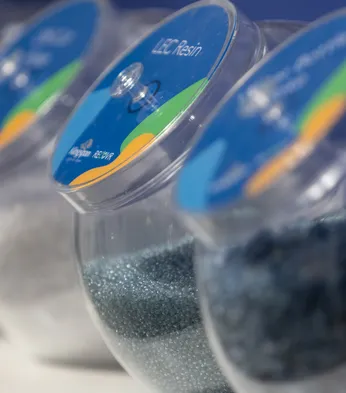
Our Lower Embodied Carbon (LEC) solutions have been developed to help reduce the carbon footprint of the buildings it is used on. Offering reductions compared to the standard product, our LEC range marks an important step in our journey to reducing embodied carbon.
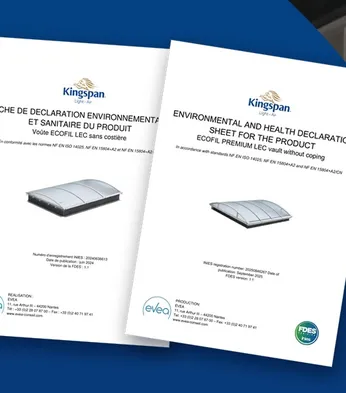
We offer LEC options for our KILON and Ecofil range. Third-party verified EPDs are available for all of our LEC products to support and affirm their high environmental performance.
Kingspan Light, Air + Water
Talk to Our Team
Our team is available to support you from first enquiry through to completion.